
Technology is changing rapidly, and programming has become an important skill for students, graduates, working professionals, and businesses. Among the many programming languages available today, Python has become a popular choice for people who want to enter software development, data science, artificial intelligence, automation, web development, and other technology fields. But what is Python, and why are so many beginners choosing it as their first programming language?
Python is a high-level, interpreted, general-purpose programming language known for its readable syntax and wide range of applications. It supports object-oriented, procedural, and other programming approaches, while its extensive ecosystem allows developers to build different types of software efficiently. Python.org also highlights its simple syntax, dynamic typing, modules, packages, and rapid development workflow as important characteristics of the language.
What Is Python Programming?
Python programming means using the Python language to create software, automate tasks, process information, develop applications, analyze data, and solve programming problems.
One of Python’s major advantages is its relatively easy-to-read syntax. Beginners can focus on understanding programming concepts instead of dealing with unnecessarily complicated syntax. Python also uses indentation to organize code, which encourages developers to write structured and readable programs.
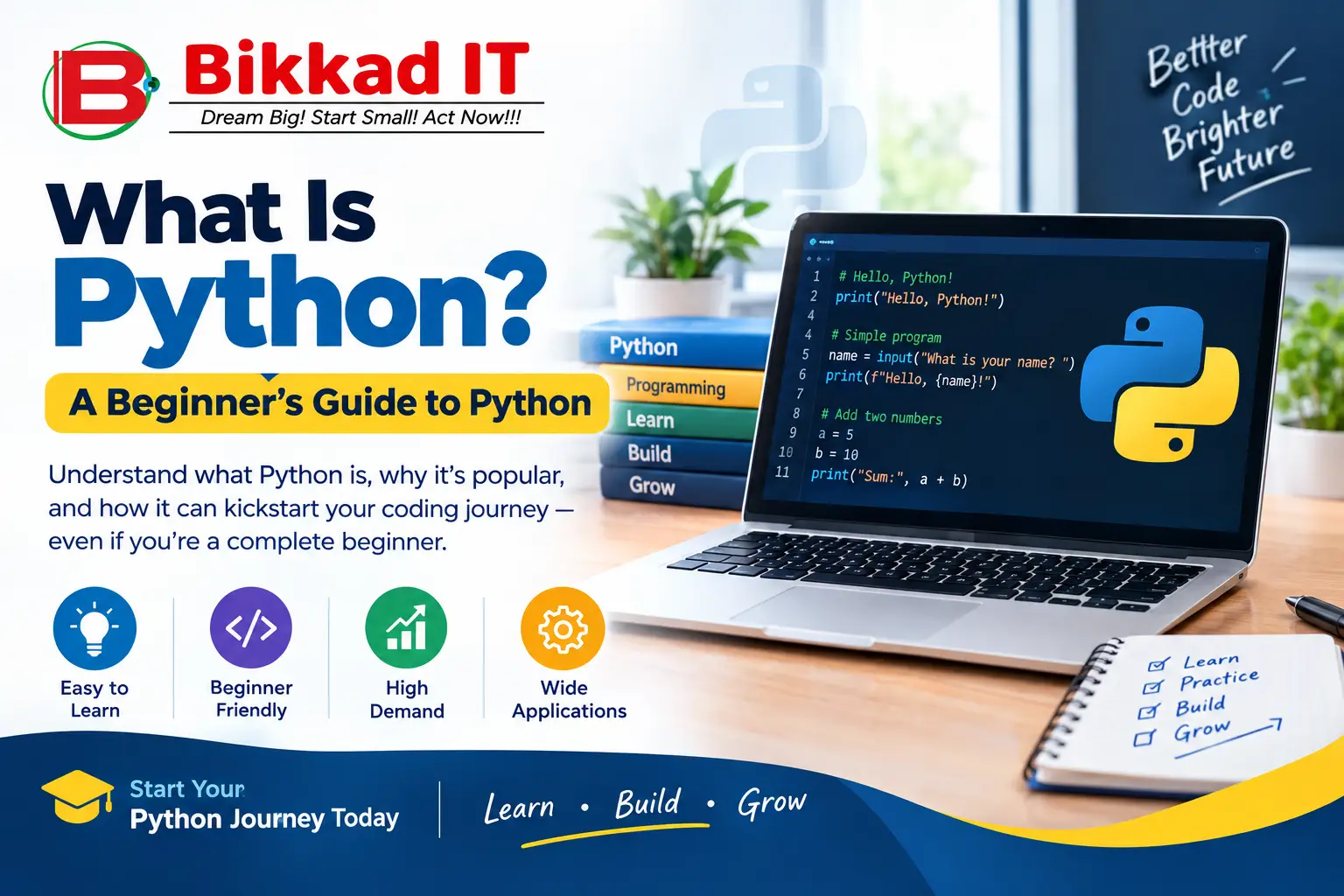
For example, a simple Python program can display a message:
print("Hello, World!")This small example demonstrates one reason Python is often recommended to people who are beginning their programming journey. Python’s official beginner resources also describe the language as suitable for newcomers and experienced programmers alike.
Why Is Python Popular?
Python has developed a broad ecosystem that supports many different areas of technology. The official Python website lists applications including web development, graphical user interfaces, artificial intelligence and machine learning, scientific and numerical computing, software development, and system administration.
Some important reasons for its popularity include:
1. Easy-to-Read Syntax
Python code is generally designed to be clear and readable. This can make it easier for beginners to understand programming logic and for development teams to maintain existing applications.
2. Wide Range of Applications
Python is not limited to one type of software. Developers can use it for websites, automation scripts, data analysis, machine learning applications, testing, scientific computing, and many other projects.
3. Large Ecosystem
Python has a large collection of libraries and frameworks that can help developers accomplish specific tasks without creating every feature from scratch.
4. Rapid Development
Python’s development workflow allows programmers to quickly write, test, identify errors, and improve their programs. Python.org specifically highlights the fast edit-test-debug cycle as one of the language’s productivity advantages.
What Can You Do With Python?
A major reason students consider learning Python is the number of career and technical areas in which the language can be applied.
Web Development
Python can be used to build websites and web applications. Frameworks such as Django, Flask, FastAPI, and others provide tools for developing different types of web-based systems.
Data Science
Python is widely used for working with data. Developers and data professionals can use libraries and tools for data processing, analysis, visualization, and statistical work.
Artificial Intelligence and Machine Learning
Python is also used in artificial intelligence and machine learning. The Python ecosystem includes tools such as PyTorch, TensorFlow, scikit-learn, and other libraries used for developing and experimenting with AI and machine learning solutions.
Automation
Repetitive computer tasks can often be automated with Python. For example, Python programs can help process files, organize information, perform routine calculations, or automate certain administrative tasks.
Software Development
Python can also be used for creating software applications, testing systems, developing internal tools, and connecting different software components.
Scientific and Numerical Computing
Python has an established ecosystem for scientific and numerical applications. Tools such as SciPy, Pandas, and IPython are among the technologies associated with the Python ecosystem.
Why Should Students in India Learn Python?
For students and aspiring technology professionals in India, learning Python can be a practical way to build foundational programming skills.
Students from computer science, information technology, engineering, mathematics, and related backgrounds can use Python to understand important concepts such as variables, conditions, loops, functions, data structures, object-oriented programming, and problem-solving.
However, Python is not limited to computer science students. Beginners from other educational backgrounds can also start with basic programming concepts and gradually move toward specialized areas.
For example, a learner may begin with basic Python syntax and later explore:
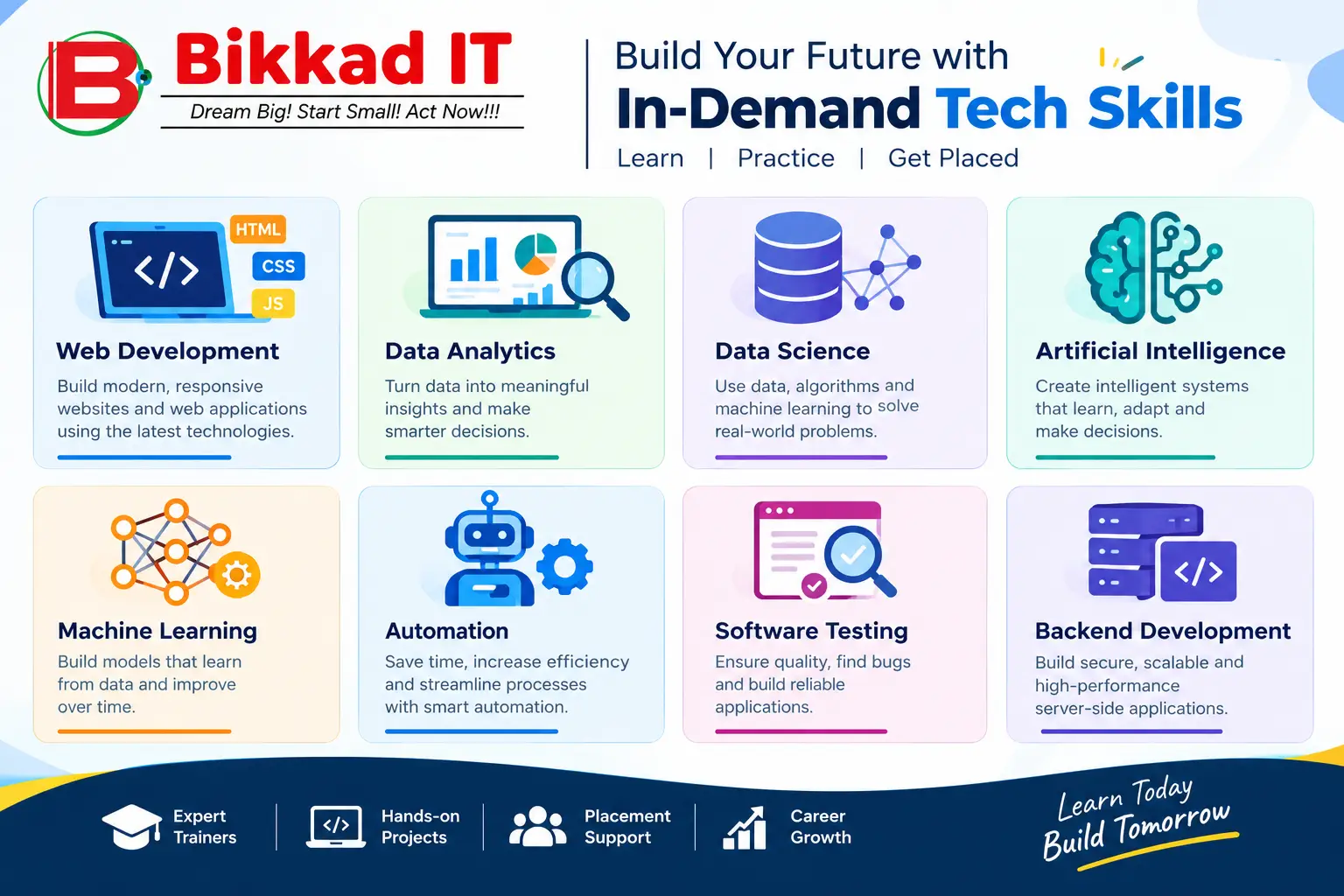
This makes Python useful for learners who want to explore different technology paths before choosing a specific specialization.
How to Start Learning Python Programming
If you are completely new to programming, it is better to follow a structured learning path rather than trying to learn everything at once.
Step 1: Learn the Basics
Start with variables, data types, operators, input and output, conditional statements, and loops.
Step 2: Understand Functions
Functions help you organize code into reusable sections. Understanding how functions work is an important step toward writing larger programs.
Step 3: Learn Python Data Structures
Spend time learning lists, tuples, dictionaries, sets, and strings. These structures are frequently used when working with real-world data.
Step 4: Practice Problem-Solving
Programming is not only about remembering syntax. Practice writing small programs and solving logical problems. Regular practice helps improve your ability to think like a programmer.
Step 5: Build Small Projects
After learning the basics, create simple projects such as a calculator, number guessing game, to-do list, file organizer, or basic data analysis project.
Step 6: Choose a Specialization
Once you understand the fundamentals, choose an area that matches your interests. For example, someone interested in websites can explore web development, while someone interested in data can move toward data analytics or machine learning.
What Should a Python Programming Tutorial Include?
A useful Python programming tutorial should go beyond explaining syntax. Beginners should understand how programming concepts are applied to real problems.
A structured tutorial can include:
- Introduction to Python
- Installing Python
- Variables and data types
- Operators
- Conditional statements
- Loops
- Functions
- Lists and dictionaries
- File handling
- Exception handling
- Object-oriented programming
- Modules and packages
- Working with libraries
- Practical projects
- Introduction to advanced Python applications
The official Python beginner resources provide installation guidance, learning resources, documentation, tutorials, and information about Python libraries.
Is Python Suitable for Beginners?
Yes, Python can be a suitable starting point for people who are new to programming. Its readable syntax and beginner-oriented learning resources can make the initial learning process more approachable. Python.org specifically states that beginners can find Python easy to learn and use.
At the same time, learning Python effectively requires consistent practice. Understanding the language is only the beginning. Learners should gradually develop problem-solving skills, write projects, understand debugging, and become familiar with the tools used in their chosen technology field.
Final Thoughts
Python programming is a versatile skill used for web development, data science, AI, automation, and software development. Learning its fundamentals through regular practice and practical projects can build a strong programming foundation. For students and aspiring developers, BikkadIT provides opportunities to develop practical Python skills and prepare for technology-focused career paths through structured learning and hands-on practice.


Pingback: Data Science Course in Hadapsar | Bikkadit